
Navratri 2026: The 9 Nights, 9 Forms of Durga, and Why It Is the Best Time for Remedies
2026-09-21 · 6 min read
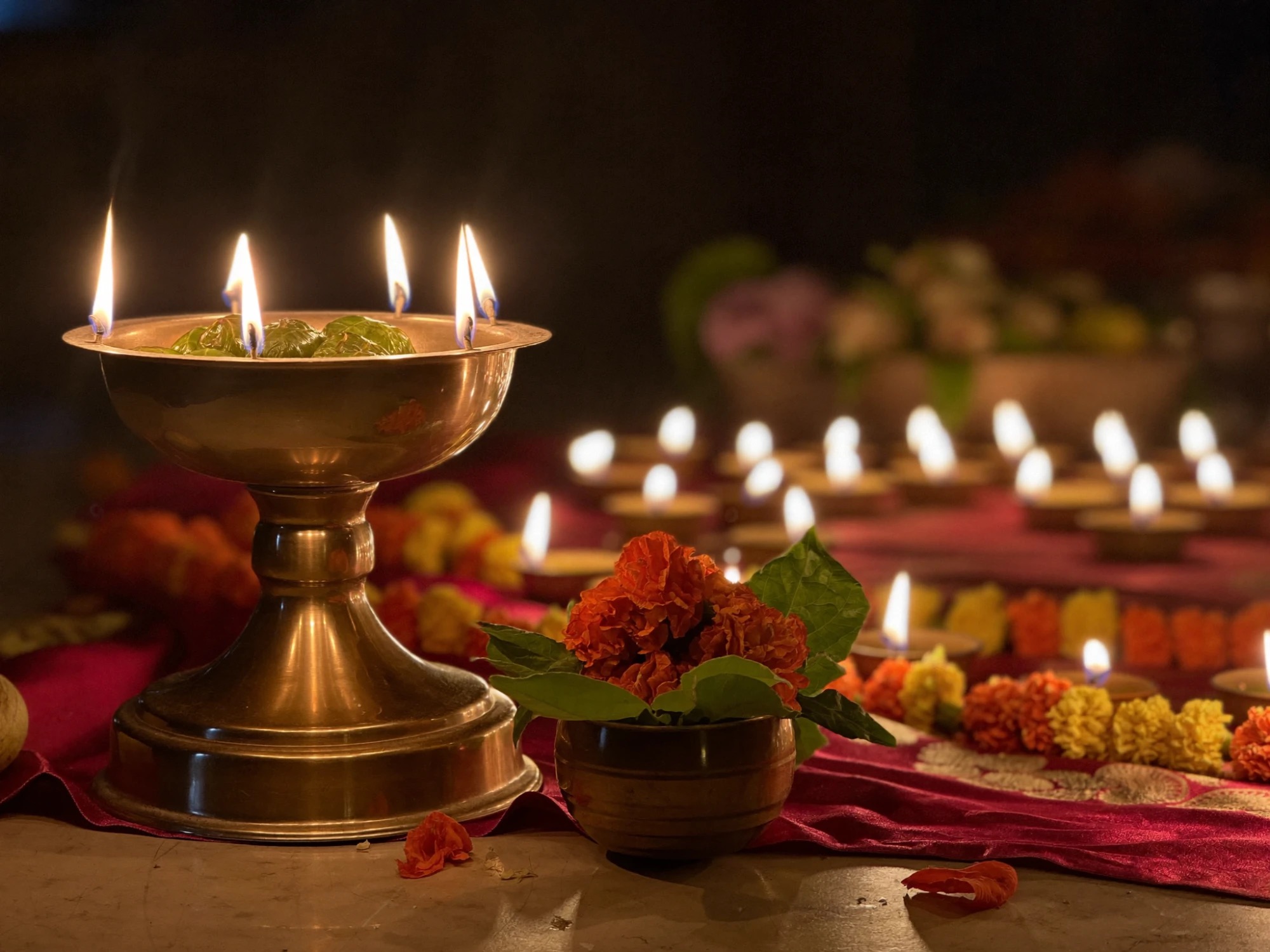
Sharad Navratri 2026 runs from Sunday, 11 October to Monday, 19 October, with Dussehra on 20 October. Across these nine nights the Devi is worshipped in nine forms, one each night, beginning with Shailputri and ending with Siddhidatri. Because the festival opens a fresh lunar fortnight and honours Shakti, the power behind every planet, Jyotish treats it as one of the best windows in the year to begin a remedy.
That last point is why an astrologer pays attention to the calendar and not only the chart. A remedy is a discipline, and a discipline begun on a rising Moon, in the Devi's own nine nights, starts with the wind behind it.
When is Navratri in 2026?
Navratri means "nine nights". The most widely observed is Sharad, or Shardiya, Navratri in the month of Ashwin, the autumn festival that culminates in Dussehra. In 2026 it begins with Ghatasthapana on 11 October and the nine nights run to 19 October, with Vijayadashami on 20 October.
Ghatasthapana, the installing of the sacred pot (kalash), is done in the first third of the day during a fixed, auspicious muhurat. It is the ritual that opens the observance, which is why the timing of the very first morning matters more than any other.
There are in fact four Navratris in the Hindu year, two of them widely kept: Chaitra Navratri in spring and this Sharad Navratri in autumn. When people say "Navratri" without qualification, they almost always mean these autumn nights.
What are the nine forms of Durga?
The nine nights are dedicated to the Navadurga, the nine forms of the Goddess. Each has her own story, her own quality, and in most households her own colour for the day. Here is the sequence for 2026.
| Night | Date (2026) | Form of Durga | What she represents |
|---|---|---|---|
| 1 | 11 Oct | Shailputri | The mountain's daughter; grounding and new beginnings |
| 2 | 12 Oct | Brahmacharini | Devotion, discipline and penance |
| 3 | 13 Oct | Chandraghanta | Courage and the calm to face conflict |
| 4 | 14 Oct | Kushmanda | Vitality, health and the light of creation |
| 5 | 15 Oct | Skandamata | Protection and the care of a mother |
| 6 | 16 Oct | Katyayani | Strength and the removing of obstacles |
| 7 | 17 Oct | Kaalratri | The fierce form that destroys fear and negativity |
| 8 | 18 Oct | Mahagauri | Purity, peace and the settling of the mind |
| 9 | 19 Oct | Siddhidatri | The giver of attainment and spiritual completion |
A helpful way to read the nine nights is in three sets of three. The first three are given to Durga as the force that clears away what holds us back. The middle three turn to Lakshmi and the drawing in of abundance and stability. The last three honour Saraswati, knowledge and the settled clarity that lets us hold what we have gained. Clear, gather, steady: the arc of the festival mirrors the arc of any real change.
Why does Navratri matter in Vedic astrology?
Vedic astrology reads the grahas as living powers, and behind those powers sits Shakti, the feminine principle the Devi embodies. Worshipping the Goddess is therefore not separate from the chart; it is addressing the source that the planets draw on.
Two things make the timing genuinely auspicious in Jyotish terms:
- It opens the bright fortnight. Navratri begins on Shukla Pratipada, the first tithi after the new Moon. A waxing Moon is the traditional time to start anything you want to grow, from a mantra to a new venture.
- It is a sustained window, not a single day. Nine consecutive nights give a remedy long enough to take root. The tradition values a discipline kept without a break far above a grand one-off gesture.
This is also why Navratri is a natural time for a fresh look at your own chart. If you have been meaning to understand your planetary periods or a difficulty you keep running into, beginning that clarity in the Devi's nights is fitting.
Which remedies suit Navratri?
Keep remedies traditional, doable and consistent. The classical categories are mantra, charity, fasting and worship, and Navratri supports all four. A few honest guidelines:
- Choose one discipline and hold it for all nine nights. A single Devi mantra chanted daily, such as the Navarna mantra Om Aim Hreem Kleem Chamundaye Vichche, done with attention, is worth more than a long list you abandon on day three.
- Light a diya each evening. A simple lamp before the Devi, kept for the nine nights, is the quietest and most traditional of observances.
- Give a charity you can sustain. Food, or a donation matched to the planet you are working with, given quietly. Charity (daan) is one of the most emphasised remedies in the tradition precisely because it costs the giver something real.
- Fast in the way your health allows. Fasting is support for the mind's focus, never a medical instruction. Keep it gentle and sensible.
A word of honesty, because it is the whole point of a proper reading: a remedy only helps when it fits the actual problem. Devi worship strengthens the Moon and the mind for almost everyone, but if your real difficulty is an afflicted Saturn running in its Sade Sati or a specific graha in your period, the mantra and charity should be tuned to that. That is a matter of reading the chart, not guessing.
How to keep Navratri simply and well
You do not need an elaborate setup. A clean space, a kalash if you keep the tradition, a lamp, a flower, and the same short prayer each night is enough. What the tradition rewards is steadiness: the same act, the same time, for nine nights, offered with attention rather than hurry.
If you want to go a step further this year, pair the observance with a clear understanding of your own chart, so the discipline you begin now carries into the months when your planetary periods actually call for it. Navratri is the doorway. Where you walk after it is what a reading is for.
May the Devi's nine nights bring clarity, strength and a fresh, well-timed start. Explore a full Kundli reading or see the current consultation options to begin.
Frequently asked questions
- When is Navratri in 2026?
- Sharad Navratri 2026 begins on Sunday, 11 October with Ghatasthapana and runs for nine nights to 19 October. Vijayadashami, or Dussehra, falls on Tuesday, 20 October 2026. These are the dates for the main autumn Navratri observed across most of North India.
- What are the nine forms of Durga worshipped in Navratri?
- The nine nights honour the Navadurga: Shailputri, Brahmacharini, Chandraghanta, Kushmanda, Skandamata, Katyayani, Kaalratri, Mahagauri and Siddhidatri, in that order. Each form is worshipped on one night, and many families also keep the day's traditional colour.
- Why is Navratri considered good for astrological remedies?
- Navratri begins on the first day of the bright lunar fortnight, a fresh Moon cycle, and is dedicated to Shakti, the active power behind the grahas. Jyotish treats any clean, rising Moon phase as favourable for beginning a discipline, so a mantra, fast or charity started and kept through the nine nights is an auspicious way to strengthen a weak planet.
- Can Navratri remedies fix a bad planet in my Kundli?
- Remedies are offered as support and guidance, not a guaranteed cure. Navratri is a good time to begin one, but which remedy fits depends on your own chart, your Lagna and the planetary period you are running. A remedy for a weak Moon is not the same as one for an afflicted Saturn, so the honest first step is to know what your chart actually needs.
- What should I actually do during the nine nights of Navratri?
- Keep it simple and consistent: light a diya, chant a Devi mantra such as the Navarna mantra, and give a small charity you can sustain for all nine days. Consistency matters more than scale. If you are addressing a specific planetary difficulty, align the mantra and charity to that graha and keep them going past Navratri.