
Numerology Explained: What Your Name and Birth Date Reveal
2026-07-17 · 6 min read
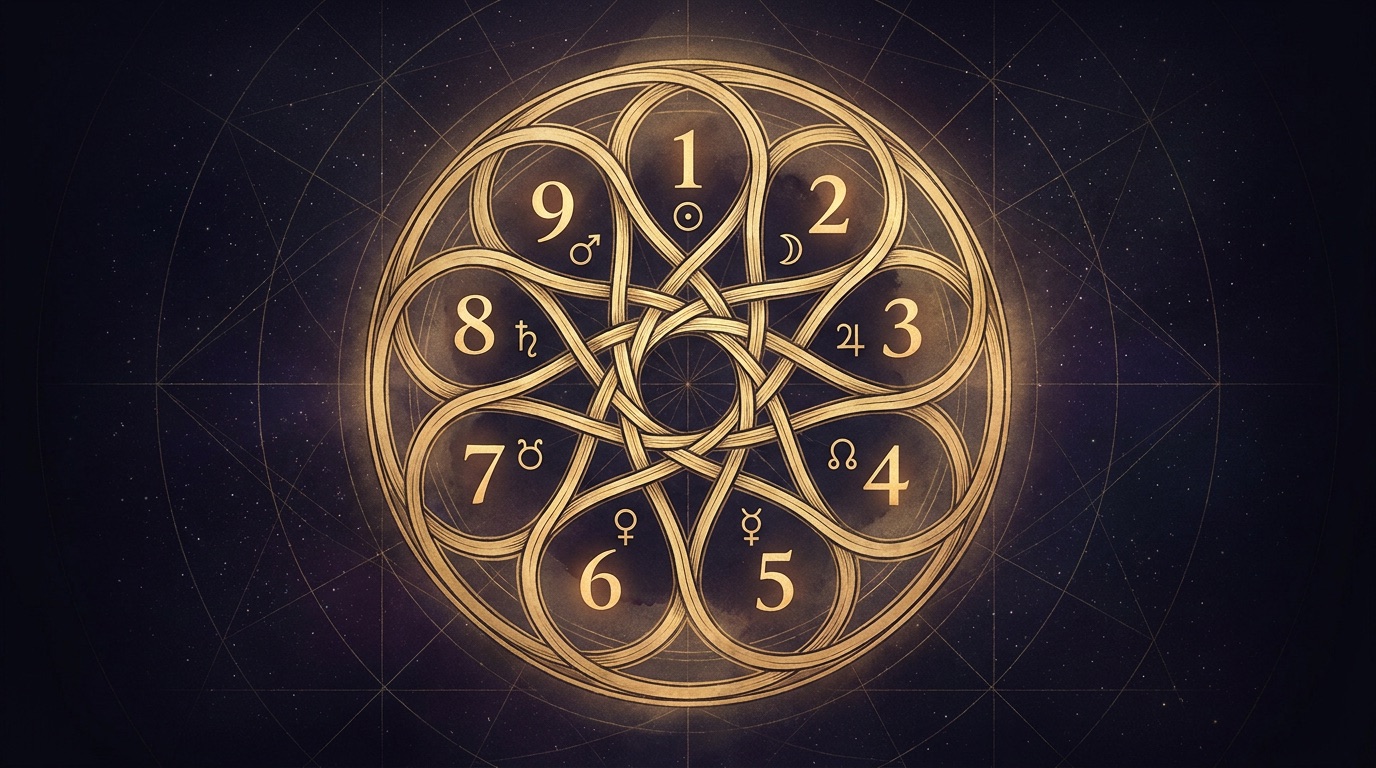
Vedic numerology reads the numbers that run through your life, your birth date and the letters of your name, by reducing each to a single digit from 1 to 9 and interpreting it through the planet that rules it. It is not a party trick with numbers but a fixed, structured system tied to the same nine planets that also govern Vedic astrology. Read properly it offers a clear picture of temperament, strengths and the patterns that tend to repeat. Here is what the main numbers mean, how they are calculated, and how a reading actually uses them.
What is numerology?
Numerology reduces the important numbers in your life to a single digit from 1 to 9, and reads each digit through the planet that rules it. In the Vedic system the associations run: 1 for the Sun, 2 for the Moon, 3 for Jupiter, 4 for Rahu, 5 for Mercury, 6 for Venus, 7 for Ketu, 8 for Saturn and 9 for Mars. Because each number carries the nature of its planet, your key numbers describe the same forces an astrologer reads in a birth chart, only approached through arithmetic rather than the sky. This is why numerology and astrology sit so naturally together in Indian practice.
How are the numbers calculated?
The method is simple and consistent: you add the digits of a number together, and keep adding until a single digit remains. The 24th becomes 6 (2 + 4). A full date such as 24 July 1990 is added right down to one digit in the same way. Letters, too, carry numbers, so a name produces a total by the same process. The rules never change, which is what makes numerology a system rather than guesswork: two practitioners working carefully will arrive at the same core numbers for the same person.
What is your Mulank (birth number)?
Your Mulank, or root number, comes from the day of the month you were born, added down to a single digit. Someone born on the 24th has a Mulank of 6; someone born on the 7th has a Mulank of 7.
The Mulank describes your core nature: how you present yourself, your instincts, your immediate personality and the way people first experience you. It is the number that colours day-to-day behaviour and first impressions. Because it is drawn only from the day of birth, it is the quickest of your numbers to establish and often the most recognisable when you hear it described.
What is your Bhagyank (destiny number)?
Your Bhagyank, or destiny number, is drawn from your full date of birth, day, month and year, all added down to a single digit. Where the Mulank is who you are on the surface, the Bhagyank points to the longer arc of your life: its direction, its lessons and the results that tend to unfold over time.
A reading always weighs the two together. A Mulank and Bhagyank that support each other suggest someone whose outward nature and life path pull in the same direction; a clashing pair can describe an inner tension between who you are and where life keeps leading you. Neither pattern is "good" or "bad" in itself, but understanding it helps you work with your own grain rather than against it.
How does name numerology work?
Every letter carries a number, so your name also produces a total that can be read. This matters more than people expect: a name is spoken, written and heard thousands of times, and in numerology that repetition gives it a real vibration in your life. Your name number can reinforce your birth numbers, or sit awkwardly against them.
And unlike your date of birth, a name can be adjusted. Where a name number clashes with the birth numbers, a small correction to the spelling, an added or altered letter, is a common remedy, chosen so the name supports rather than fights the chart. This is why you sometimes see people add a letter to their name; done knowingly, it is a numerological adjustment, not a whim. A good practitioner makes such a change conservatively and explains exactly why.
What the single digits tend to signify
Each number carries the flavour of its planet. In broad terms:
| Number | Ruling planet | What it tends to signify |
|---|---|---|
| 1 | Sun | Leadership, independence, a strong sense of self |
| 2 | Moon | Sensitivity, cooperation, an emotional and caring nature |
| 3 | Jupiter | Wisdom, optimism, teaching and expansion |
| 4 | Rahu | Unconventional thinking, drive, sudden change |
| 5 | Mercury | Communication, quickness, adaptability |
| 6 | Venus | Beauty, relationships, comfort and harmony |
| 7 | Ketu | Introspection, spirituality, a searching mind |
| 8 | Saturn | Discipline, endurance, slow but lasting results |
| 9 | Mars | Energy, courage, action and determination |
These are starting points, not verdicts. The art of a reading is in how the numbers combine, how the Mulank, Bhagyank and name number reinforce or complicate one another across a whole life.
What a numerology reading includes
A proper numerology reading covers:
- Your Mulank and Bhagyank, and how the two work together.
- The ruling planets behind your numbers and what they favour.
- Your name number, and whether a spelling correction would help.
- Guidance on favourable numbers, days and directions for important decisions, such as signing an agreement, starting a venture or choosing a date.
Numerology is often read alongside the Kundli, so the numbers and the birth chart confirm and refine one another rather than being read in isolation. When both point the same way, the guidance is firmer; when they differ, that itself is worth understanding.
Where numerology helps most
People turn to numerology for practical, everyday choices as much as for self-understanding: the spelling of a child's name, the name of a new business, a favourable date to begin something important, or simply a clearer sense of their own strengths. Because it is quick to calculate and easy to act on, it is one of the most usable branches of the tradition, a set of small, well-chosen adjustments rather than sweeping predictions.
Have your own numbers read
At Astro Anita, numerology is read carefully and alongside your chart where it helps, covering birth number, destiny number, a name check and clear, doable guidance, in Hindi or English. The aim is not a list of lucky numbers but a genuine understanding of how your numbers shape your life and what small changes are worth making.
If you would like your own numbers read, birth number, destiny number and a name check, book a numerology reading with your date of birth and full name, or browse the consultations to see what else may suit you.
Frequently asked questions
- How do I calculate my Mulank (birth number)?
- Your Mulank comes from the day of the month you were born, added down to a single digit. Someone born on the 24th has a Mulank of 6 (2 plus 4), and someone born on the 7th has a Mulank of 7. It describes your core nature and first impressions.
- What is the difference between Mulank and Bhagyank?
- The Mulank is drawn only from your day of birth and describes your surface nature. The Bhagyank, or destiny number, is drawn from your full date of birth (day, month and year) and points to the longer arc of your life. A reading always weighs the two together.
- Does changing the spelling of your name really work?
- In numerology a name carries a number, and where it clashes with the birth numbers a small spelling correction is a common remedy, chosen so the name supports the chart. It should be done conservatively and explained clearly, not treated as a quick fix.
- Is numerology part of Vedic astrology?
- They are closely linked. Vedic numerology reads each digit through the planet that rules it, the same nine planets an astrologer reads in a chart. Numerology is usually read alongside the Kundli so the numbers and the chart confirm and refine one another.