
Do Gemstones Really Work in Vedic Astrology? 7 Checks Before You Wear One
2026-08-27 · 8 min read
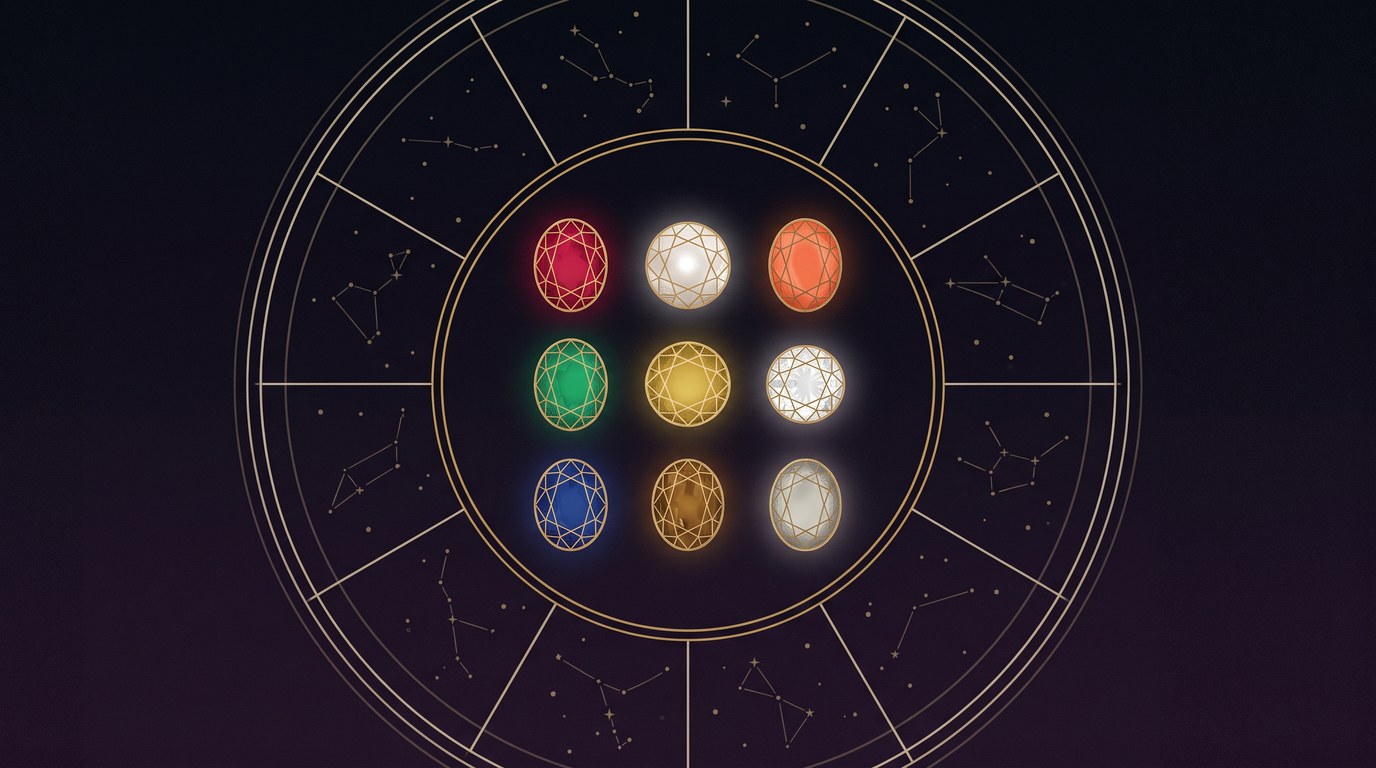
In classical Vedic astrology a gemstone is an amplifier, not a cure. Each of the nine grahas has a stone said to carry its energy, and wearing that stone is held to strengthen that planet. That only helps if your chart actually wants that planet strengthened. Worn on the advice of a properly read Kundli, a gemstone is a supportive remedy. Worn because a website matched it to your birth date, it is a coin toss.
That distinction is the whole subject, and it is the one the gemstone market has least interest in explaining.
What does Vedic astrology actually claim a gemstone does?
Jyotish assigns nine gemstones to the nine grahas, together called the Navratna. The claim is narrow and specific: the stone acts as a channel for that planet's influence and strengthens its expression in your life. It is not claimed to remove a planet from your chart, cancel a Dasha, or rewrite a placement.
Gems have a long documented place in Sanskrit literature. Varahamihira's sixth century Brihat Samhita devotes a chapter, the Ratna Pariksha, to the examination of gems, listing more than twenty varieties and how to judge their quality. What the classical texts describe carefully is the testing of stones. What they never do is promise a fixed outcome.
A fair reading of the tradition, then: a gemstone is one supportive remedy among several, and it ranks below understanding your chart and living according to it. Treat any stronger claim with suspicion.
Which gemstone belongs to which planet?
| Graha | Gemstone | Common Indian name | Usual metal | Usual finger | Day |
|---|---|---|---|---|---|
| Surya (Sun) | Ruby | Manik | Gold | Ring | Sunday |
| Chandra (Moon) | Natural pearl | Moti | Silver | Little | Monday |
| Mangal (Mars) | Red coral | Moonga | Gold or copper | Ring | Tuesday |
| Budh (Mercury) | Emerald | Panna | Gold or silver | Little | Wednesday |
| Guru (Jupiter) | Yellow sapphire | Pukhraj | Gold | Index | Thursday |
| Shukra (Venus) | Diamond | Heera | Silver or platinum | Middle or ring | Friday |
| Shani (Saturn) | Blue sapphire | Neelam | Silver or panchdhatu | Middle | Saturday |
| Rahu | Hessonite garnet | Gomed | Silver or panchdhatu | Middle | Saturday |
| Ketu | Cat's eye | Lehsunia | Silver or panchdhatu | Ring or little | Thursday |
Metal, finger and day conventions vary between regional schools. If your astrologer's instruction differs from this table, follow your astrologer. The graha to stone pairing in the first two columns is the part that is genuinely standard.
There are also upratna, semi-precious substitutes such as white sapphire for diamond or green onyx for emerald. They are cheaper and generally considered milder, which for a first stone is often a feature rather than a fault.
Why can the wrong gemstone make things worse?
This is the part the shops leave out. If a stone strengthens a planet, it strengthens that planet regardless of whether the planet is helping you.
In Parashari practice a planet is not simply good or bad. Its functional nature depends on your Lagna, because the Lagna decides which houses each planet rules. The same Saturn is supportive for one ascendant and difficult for another. Broadly:
- Planets that rule your 1st, 5th and 9th houses are the ones most classical astrologers are willing to strengthen.
- Planets that rule your 6th, 8th and 12th houses, the dusthanas, are the ones most are reluctant to strengthen, because amplifying them is expected to make those themes more prominent.
- Placement modifies all of this. A benefic house lord sitting in a dusthana behaves differently from the same lord sitting in a kendra.
Which is why gemstone selection has to start from the chart structure, not the stone. If you have not yet read how houses and house lords work, the 12 houses in a Kundli covers the framework this rests on, and what your Kundli actually reveals is the wider picture.
The other half of the question is timing. A remedy aimed at a planet that will not run its Dasha for another nineteen years is not the most useful thing you could be doing this year. Running periods are how Jyotish decides what is live now, which the Vimshottari Dasha guide explains in full. The same logic applies to a hard transit such as Sade Sati, where the remedy has to match the planet actually doing the work.
What are the 7 checks before you wear an astrological gemstone?
- Was it chosen from your full Kundli? Lagna, house lords, planetary strength and the running Dasha. If the recommendation came from your sun sign, your name, your birth number or a dropdown menu, it was not.
- Do you know why this planet? Ask your astrologer which planet the stone is for, which houses that planet rules in your chart, and why strengthening it is appropriate now. A practitioner who can answer that in plain language has actually read your chart.
- Is the stone natural and untreated? Jyotish quality means natural, unheated and untreated. Heat treated, glass filled, lab grown and synthetic stones are common in the market and are not what the tradition describes. Insist on a report from a recognised laboratory such as GIA or a reputable Indian gem lab.
- Are you paying for the stone or for the story? A modest certified stone from an honest dealer serves the traditional purpose better than an expensive one bought under pressure.
- Is the weight sensible? A common convention is roughly one ratti per twelve kilograms of body weight, with most prescriptions between about 5 and 7 ratti. One ratti is about 0.91 carat. Do not let a seller push the weight up beyond what your astrologer specified.
- Does the stone touch the skin? Traditional setting leaves the back of the stone open so it rests against the finger. This is standard practice across schools.
- Are you willing to stop? Classical caution says that if the weeks after starting a stone feel consistently disturbed, remove it and go back to the astrologer. A remedy you are afraid to remove has stopped being a remedy.
One more check is not on the list because it is not optional: nobody should be prescribing you a stone for a medical problem. Gemstones are traditional guidance, not treatment, and they do not replace a doctor.
Should you try anything before buying a gemstone?
Usually, yes. Gemstones are the most expensive remedy in the Jyotish toolkit and rarely the first one a careful astrologer reaches for.
| Remedy | What it costs | Typical use |
|---|---|---|
| Mantra japa for the graha | Time and consistency | The default first remedy in most traditions |
| Daan (charity) tied to the planet | Small and repeatable | Long standing practice for difficult periods |
| Fasting or dietary discipline on the planet's day | Nothing | Widely prescribed, easy to sustain |
| Routine and conduct changes | Nothing | Where most real improvement is reported |
| Upratna (semi-precious substitute) | Modest | A gentler first trial before a main stone |
| Main gemstone | High | When the chart clearly calls for it |
If your practitioner goes straight from your birth details to a stone they happen to sell, that ordering has been skipped for a reason that has nothing to do with Jyotish.
Is there scientific proof that gemstones work?
No, and it is better to say so plainly. There is no peer-reviewed evidence that gemstones produce the effects Jyotish attributes to them, and the classical sources do not frame the matter in scientific terms in the first place. Vedic astrology is a traditional interpretive discipline with its own internal logic and a long documented history. It is offered as guidance, not as proven mechanism and not as guaranteed prediction.
That honesty cuts both ways. It also means nobody can promise you that a blue sapphire will fix your career or that a pearl will settle your marriage. When you see that promise, you are reading a sales page.
So, do gemstones really work?
The useful answer has three parts. Correctly chosen, from a properly read chart, with a natural stone and realistic expectations, a gemstone is a legitimate traditional remedy and many people find it supportive. Chosen from a birth date, a sun sign or a shop's recommendation engine, it is a guess dressed up as a diagnosis. And as a substitute for understanding your own chart, it does not work at all, because it was never meant to.
A chart is a diagnosis, not a sentence. The stone, when it is warranted, is one line in the prescription, never the prescription itself. To find out which planet your chart is actually asking you to work with, book a reading or see the consultation options.
Frequently asked questions
- Do gemstones really work in Vedic astrology?
- In the classical view a gemstone is an amplifier, not a cure. It is said to strengthen the planet it belongs to, which helps only if that planet is one your chart wants strengthened. Worn on the advice of a chart, a gemstone is treated as supportive guidance. Worn on the basis of a sun sign, a birth number or a shop chart, it is a coin toss, and the tradition itself is clear that a wrongly chosen stone can amplify the wrong thing.
- Which gemstone should I wear according to my date of birth?
- No honest answer exists from a date alone. Gemstone selection in Jyotish depends on your Lagna, which planets rule your benefic houses, where those planets sit, and which Dasha is running. Two people born on the same date in different cities at different times can need different stones, or no stone at all. Any tool that gives you a gemstone from your birth date alone is guessing.
- Can wearing the wrong gemstone cause harm?
- The tradition holds that a stone strengthens whichever planet it belongs to, without judging whether that is good for you. Strengthening a planet that rules your difficult houses is therefore expected to make those matters more prominent rather than less. Classical practice recommends removing a stone if the period after wearing it feels consistently disturbed. This is a traditional caution, not a medical claim.
- Is there scientific proof that astrological gemstones work?
- No. There is no peer-reviewed scientific evidence that gemstones produce the effects Jyotish attributes to them. Gemstone remedies belong to a classical Indian tradition documented in texts such as Varahamihira's Brihat Samhita, and they are offered as guidance within that tradition. Anyone promising you a guaranteed result from a stone is selling, not advising.
- What is the correct weight of an astrological gemstone in ratti?
- There is no single correct number. One common Indian convention suggests roughly one ratti per twelve kilograms of body weight, with most prescriptions landing between about 5 and 7 ratti. One ratti is approximately 0.91 carat. Weight conventions vary between schools, and the more important questions are whether the stone suits your chart at all and whether it is natural and untreated.