
Lagna vs Rashi vs Sun Sign: Which One Is Actually Your Sign?
2026-08-11 · 8 min read
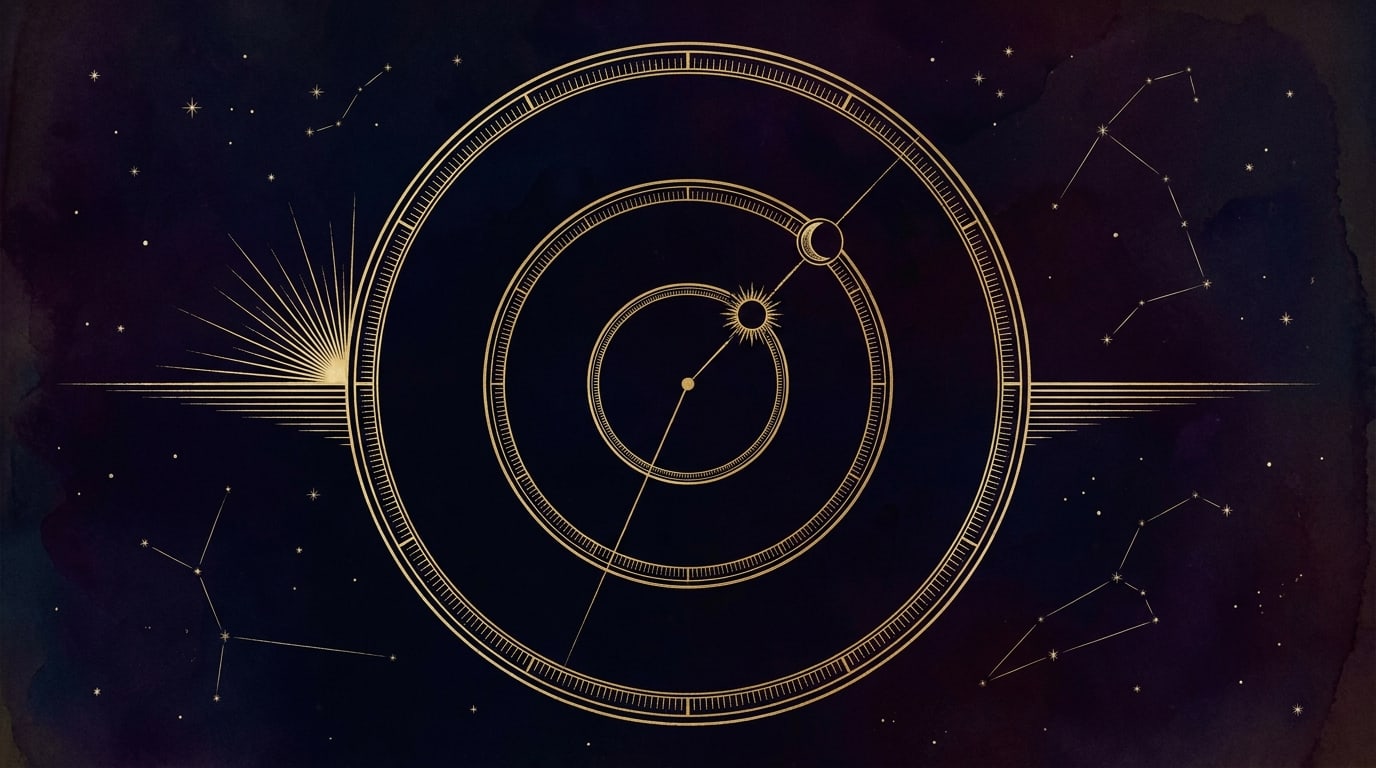
Your Lagna is the sign rising on the eastern horizon at your birth, your Rashi is the sign your Moon was in, and your Sun sign is the sign your Sun was in. They are three separate measurements and they usually disagree. In Vedic astrology the Lagna leads the reading, the Rashi carries the mind, and the Sun sign is the weakest of the three.
That is the whole answer. What follows is why the tradition ranks them that way, and how to work out which of yours is which.
What is your Lagna (ascendant)?
The Lagna, also called the ascendant or the rising sign, is the sign of the zodiac that was climbing over the eastern horizon at the exact moment and place you were born. The Earth turns once a day, so the whole zodiac rises over the course of 24 hours, which means the Lagna changes roughly every two hours.
Its importance in Jyotish is structural, not decorative. The Lagna becomes the first house of your Kundli, and every other house is counted from it. Change the Lagna and every graha in the chart moves to a different house, which changes what it governs in your life. This is why a chart cast without a birth time is a chart missing its frame (ascendant).
Classically the Lagna signifies the physical body, appearance, constitution, temperament and the general direction of the life. If you want to see how the frame it creates actually works, that is the subject of the 12 houses in a Kundli.
What is your Rashi (Moon sign)?
Your Rashi, more precisely your Chandra Rashi, is the sign the Moon occupied when you were born. The Moon crosses the zodiac in about 27.3 days, so it stays in one sign a little over two and a quarter days.
When an Indian family asks what your Rashi is, this is what they mean. It is the sign your name letter may have come from, the sign a temple priest will ask for, and the sign a newspaper or television horoscope is written against. The Moon governs manas, the thinking and feeling faculty, so the Rashi describes how you take life in rather than how you meet it.
It also does heavy technical work. Transits, gochar, are judged from the Moon sign, which is why Sade Sati is counted from your Rashi and not your Lagna or your Sun. The nakshatra the Moon sits in within that sign then seeds your entire Vimshottari Dasha timeline.
What is your Sun sign in Vedic astrology?
Your Surya Rashi is the sign the Sun was in at birth. The Sun takes about a month to cross a sign, so this is the coarsest of the three: everyone born within roughly a thirty day window shares it.
Jyotish does use it. The Sun signifies the soul, vitality, authority, the father, and standing in the world, and a careful astrologer will read the chart a third time treating the Sun's sign as the first house. What Jyotish does not do is treat it as your identity. A measurement that a hundred million people share cannot describe one life.
There is also a good chance it is not the sign you think. Vedic astrology uses the sidereal zodiac, fixed against the actual stars. Western astrology uses the tropical zodiac, fixed to the spring equinox, which drifts slowly backwards against the stars because of the Earth's axial precession (axial precession). The two zodiacs have separated by roughly 24 degrees, a correction called the ayanamsha. In practice that means most people's Vedic Sun sign is the sign before their Western one. Someone told all their life that they are a Leo is usually a Cancer in a Kundli. The full comparison is in Vedic vs Western astrology.
Lagna vs Rashi vs Sun sign: the comparison
| Lagna (ascendant) | Rashi (Moon sign) | Surya Rashi (Sun sign) | |
|---|---|---|---|
| What it marks | Sign rising in the east at birth | Sign the Moon occupied | Sign the Sun occupied |
| How often it changes | About every 2 hours | About every 2.25 days | About every 30 days |
| Birth time needed | Yes, to the minute if possible | Only if born near a boundary | Almost never |
| Governs | Body, appearance, health, the shape of the life | Mind, emotion, instinct, memory | Soul, vitality, authority, the father |
| Role in the Kundli | Sets the 1st house and all 12 houses | Base for transits and Dasha | A secondary reference point |
| Called | Lagna, ascendant, rising sign | Rashi, Chandra Rashi, Moon sign | Surya Rashi |
| Weight in Jyotish | Highest | High | Lowest of the three |
| Shared with | People born in your city within 2 hours | Anyone born in the same 2 day window | Anyone born in the same month |
The pattern in that table is the argument. The faster a marker moves, the more it can distinguish one person from another, and the more classical weight it carries.
Which one is really your sign?
If you need one answer for one question, use this:
- Reading your chart properly: the Lagna. Parashari method builds the houses from it, and a graha is judged good or difficult largely by which houses it rules from the Lagna.
- Saying your Rashi in an Indian context, or reading transits: the Chandra Rashi. This is what the priest, the family and the Panchang mean.
- A rough note on vitality, ego and the father: the Sun sign, read as a supplement.
In practice a trained astrologer does not choose. The classical technique is to read the question from the Lagna, then cast the same chart with the Moon as the first house, the Chandra Lagna, and see whether the two agree. A result promised from both usually arrives. A result promised from one and denied by the other is weaker. The Sun is used as a third check in the same way.
This is also why one line answers about signs go wrong so often. A person with Aries Lagna, Cancer Rashi and Gemini Sun is not three contradictory people. They present sharply, feel privately, and think restlessly, and the chart reads as one whole.
Why does the Lagna need such an exact birth time?
Because it moves fastest. The Lagna advances roughly one degree every four minutes, so a twenty minute error can shift the house positions enough to change a reading, and a two hour error usually changes the Lagna sign outright.
Two practical notes. First, the rising sign does not stay for a neat two hours everywhere; signs rise at different speeds depending on latitude, so at higher latitudes some signs take much longer than others. Second, birth times remembered by family are often rounded to the nearest half hour. If you can, take the time from the hospital record or the birth certificate.
What if you do not know your birth time?
You are not stuck, but you should know what is lost. Without a time, your Sun sign is still certain and your Rashi is usually certain, since the Moon holds a sign for over two days. What you cannot fix is the Lagna, and therefore the house positions, which is most of what a reading depends on.
An astrologer can narrow the time by birth time rectification, working backwards from dated life events such as marriage, a move abroad, a bereavement or a career change, and testing which Lagna and Dasha sequence fits them. It takes longer than an ordinary reading and it is an estimate rather than a record, but it is honest work and it is often good enough to proceed. What no one should do is guess a time silently and read the chart as if it were certain. What a Kundli actually reveals covers what the finished reading is built from.
The short version
You have three signs, not one, and they measure different things at different speeds. The Lagna is the frame of your chart and needs an accurate birth time. The Rashi is the mind, the sign India actually means, and the base for transits. The Sun sign is real but broad, and in a Vedic chart it is usually not the sign a Western horoscope gave you. Read together they describe a person. Read alone, any one of them is a caricature.
Frequently asked questions
- What is the difference between Lagna and Rashi?
- Your Lagna is the sign rising on the eastern horizon at your moment of birth, and it changes about every two hours. Your Rashi is the sign the Moon occupied at birth, and it changes about every two and a quarter days. The Lagna sets the house framework of the whole Kundli and describes the body and outward life. The Rashi describes the mind and feeling, and it is the base used for transits.
- Which sign is my real sign in Vedic astrology?
- In Jyotish there is no single real sign. The Lagna is the primary reference for reading a chart, the Chandra Rashi is the one Indians normally mean when they say their Rashi, and the Sun sign is a third, weaker layer. A trained astrologer reads a chart from the Lagna first and then cross checks the same question from the Moon.
- Why is my Vedic Sun sign different from my Western one?
- Because the two systems measure from different starting points. Vedic astrology uses the sidereal zodiac, fixed against the actual stars, while Western astrology uses the tropical zodiac, fixed to the spring equinox. The gap between them is currently around 24 degrees, so most people find their Vedic Sun sign is the sign before their Western one.
- Do I need my birth time to know my Lagna?
- Yes. The Lagna moves through all twelve signs in a single day, roughly one sign every two hours, so an error of a couple of hours usually changes it. Your Rashi is more forgiving, since the Moon stays in a sign for over two days, and your Sun sign needs only the date in almost every case.
- Which sign should I read a horoscope for?
- In Indian practice, general horoscopes and transit predictions are read for the Chandra Rashi, the Moon sign, which is also how Sade Sati and the Panchang are calculated. Reading for a Western Sun sign will give you the wrong sign entirely in most cases, and even the right sign is far too broad to say anything about one person.